China Best Biometric Access Control What Are Its Benefits?

Time:2026-11-26 Author:Sophia
0%

A door opens with a quick fingerprint scan. No badge to forget. No shared PIN to pass around. That convenience helps explain growing interest in biometric access control. Grand View Research estimated the global biometric system market at USD 42.9 billion in 2022 and projected a 20.4% compound annual growth rate through 2030. The figure covers more than door entry, but it signals wider adoption of biometric technologies.

So, what are the advantages of biometric access control? It can link entry to a person’s physical trait, reduce reliance on cards, and create clearer access records. Bruce Schneier, security technologist and author, has warned: “Biometrics are unique identifiers, but you can’t change them if they are compromised.” That caution matters. A fingerprint reader at a side entrance may speed up staff access, yet poor enrollment or a badly placed sensor can frustrate people and weaken trust. Not flawless. Not automatic. Good systems pair accurate readers with secure data handling, fallback entry, and careful access policies. Buyers comparing China’s biometric access control options should examine those details, not just advertised recognition speed. Specifications look tidy. Real corridors are messier. A practical choice balances convenience, security, privacy, and reliable support.
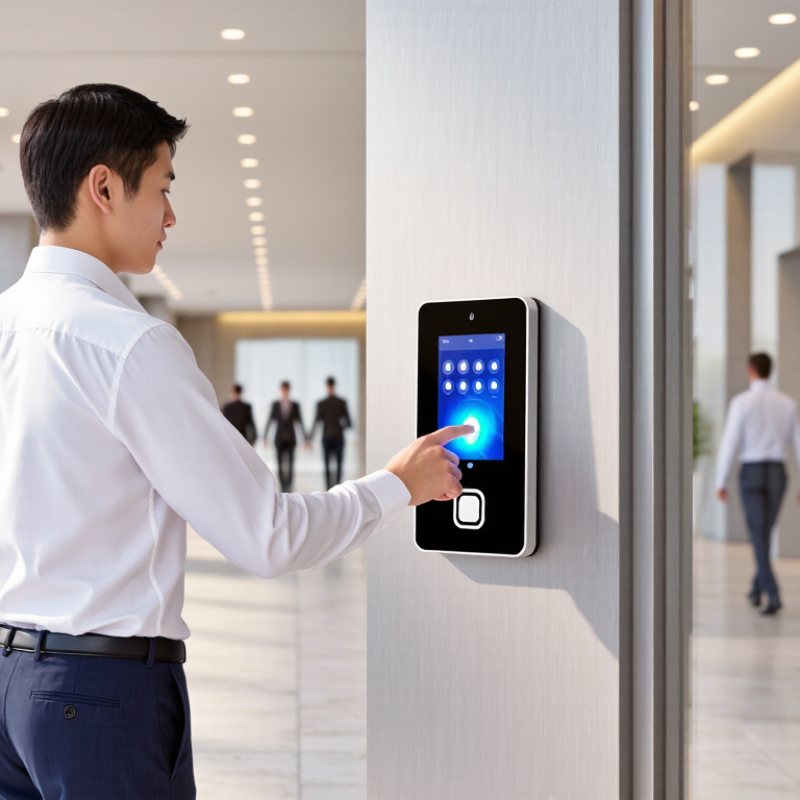
China Best Biometric Access Control What Are Its Benefits?

What Is Biometric Access Control?

Biometric access control is a way to manage entry by checking a person’s physical or behavioral characteristics. Common examples include fingerprints, facial features, iris patterns, and palm geometry. A sensor captures a sample when someone approaches a door or reader. Software converts it into a mathematical template and compares it with an enrolled template. If the match meets the system’s threshold, a controller can release the lock and record the event. Not magic. The technology checks similarity; it does not know who someone is in a human sense.

In a workplace, this can make entry quicker than searching for a card or remembering a code. A staff member may place one finger on a reader beside a glass door, then hear the lock click. Results depend on the sensor, setup, and conditions. A wet or dusty finger may be rejected, while poor lighting can affect some facial readers. Enrollment quality matters too. A hurried scan can create problems later. That detail matters. Organizations should explain what data is collected, limit who can access it, and provide a practical backup method for people the sensor cannot reliably recognize. No system works perfectly in every setting, and that limitation deserves honest attention.

How Biometric Access Control Systems Work in China

In China, biometric access control is used in settings such as office entrances, residential buildings, and factory floors. A person presents a fingerprint, face, or another supported biometric feature to a reader. The device captures an image or measurement, then converts it into a digital template. Not magic. The template is compared with enrolled records, either on the device or through a connected system.

If the match meets the system’s set threshold, a controller signals the door lock to open. The event may also be recorded with a time and door location. Some installations connect access readers with visitor management or attendance systems. Setup matters: enrollment should capture clear samples, and staff need a practical way to handle failed scans. A dusty fingerprint reader or poor lighting can slow people down.

These systems reduce reliance on shared cards or remembered codes, but they do not remove every access risk. Face matching can be affected by lighting, masks, or changes in appearance. It can fail. Good deployments limit who can view biometric records, protect stored templates, and provide an alternative verification method. Procedures vary between sites, so managers should test real entry conditions before expanding a system. A small pilot often reveals problems that a specification sheet misses.

China Biometric Access Control: Benefits and How It Works

Urban and rural population shares provide context for access-control planning across China. These figures describe population distribution—not biometric-system adoption.

Biometric systems typically capture a fingerprint or face, convert it into a template, compare it with an enrolled template, and grant or deny access. They can reduce reliance on physical keys and PINs. Population data: China's National Bureau of Statistics, Statistical Communiqué on the 2023 National Economic and Social Development.

Which Biometric Technologies Are Commonly Used?

Biometric access control verifies a person through distinctive physical or behavioral traits. Fingerprint readers are common at office doors because they are compact and quick to use. A clean, dry finger usually scans more reliably than a wet or dusty one. Small details matter. Worn fingerprints or certain hand conditions can cause repeated failures, so a backup credential is practical.

Facial recognition can allow hands-free entry, which is useful when staff carry boxes or equipment. Performance may vary with poor lighting, face coverings, camera placement, and changes in appearance. Iris recognition examines patterns in the eye and can offer precise matching, but users may find close-range scanning uncomfortable. Palm-vein systems read patterns beneath the skin, often without requiring direct contact. They can be useful in settings where shared touch surfaces are a concern.

Some systems also use voice or behavioral signals, such as typing patterns, though background noise and changing habits can affect consistency. No method is perfect. A site should test devices at actual entrances, during busy periods, and with people who have different accessibility needs. It should also protect biometric templates carefully and provide a clear alternative when a scan fails. These practical checks are easy to overlook.

What Benefits Do These Systems Offer?

Biometric access control links entry permissions to measurable traits, such as a fingerprint or facial pattern. Staff do not need to remember a code or search for a badge. That saves time. At a clinic entrance, for example, employees can verify their identity while carrying supply boxes. In a shared office, access records can help managers review who entered a restricted room and when. These records are useful, but they should be checked against real operating needs rather than treated as proof of every event.

Contactless readers can reduce the need to touch shared surfaces, while fingerprint readers may suit controlled indoor locations. The right choice depends on traffic, lighting, and the work people do. Small details matter. Wet fingers, protective equipment, or poor lighting can affect recognition, so testing at the actual doorway is important. No system is perfect. Clear enrollment procedures, restricted access to biometric data, and a reliable backup method help make daily use more dependable. A badge or staffed check-in can cover cases where a reader fails, though it adds steps. That trade-off deserves honest review before installation.

How to Choose a Biometric Access Control System in China

Choosing a biometric access control system in China starts with the site, not the feature list. A humid factory entrance, a bright office lobby, and a cold outdoor gate place different demands on a reader. Check its performance in the actual lighting, temperature, and daily traffic conditions. Test fingerprint and facial recognition with employees wearing gloves, masks, or safety equipment. Small details matter.

Next, assess enrollment, accuracy, and fallback access. Ask how the system handles changed fingerprints, failed matches, and visitors who should not be enrolled. A PIN or staffed verification process can prevent a minor sensor issue from stopping a shift. Check whether access records connect with existing doors, alarms, and attendance tools. Keep the setup manageable. Complex systems are harder to maintain.

Data protection deserves equal attention. Confirm where biometric templates are stored, who can access them, how long they are retained, and how they can be removed when no longer needed. Ask the supplier for clear documentation and a realistic support plan in China, including response times and spare-part availability. Run a pilot at one entrance before expanding. A neat demo is not enough; real users may behave differently, and even a careful selection can miss something.

China Best Biometric Access Control: What Are Its Benefits? — How to Choose a Biometric Access Control System in China

Evaluation Area Potential Benefit or Key Consideration How to Choose and Verify
Access security Biometric verification can make credential sharing more difficult than access based only on a card or PIN. It can also be combined with cards or PINs for layered authentication. Match the authentication method to the site’s risk level. Ask how the system handles failed matches, repeated attempts, and access revocation.
Convenience and speed Users may enter without carrying or presenting a separate credential, which can simplify routine entry and reduce lost-card administration. Test entry flow during busy periods and with representative users. Confirm that an alternative access method is available when biometric verification fails.
Audit and administration Access-control records can help authorized administrators review entry events and manage permissions centrally. Check which events are recorded, who can view or export records, how long records are retained, and whether administrator actions are logged.
Biometric method Fingerprint, facial, and other biometric methods differ in user experience, hardware needs, and suitability for different environments. Evaluate the actual method against the location, user population, lighting, hygiene needs, and required throughput. Do not assume one method suits every site.
Liveness and spoof resistance Presentation-attack detection may help distinguish a live user from an attempted presentation of a photograph, recording, or artificial fingerprint. Request documented test results and demonstrate relevant attack scenarios. Ask what detection features are included and how they are maintained.
Accuracy and inclusion Recognition performance can vary with sensor quality, positioning, lighting, user characteristics, and changes to a user’s physical condition. Run a pilot with a representative group. Measure successful first attempts, false rejections, queue time, and the frequency of assisted or fallback entry.
Privacy and legal compliance Biometric information is sensitive personal information under China’s Personal Information Protection Law (PIPL). Its processing requires particular care, including a specific purpose, sufficient necessity, strict protection, and applicable consent and notice measures. Before deployment, assess necessity and proportionality, provide clear notices, confirm the applicable consent requirements, restrict access, and define retention and deletion rules. Obtain qualified advice on the specific use case.
Data storage and transfers Deployment architecture affects where biometric templates and access records are stored and who can access them. Document data flows, storage locations, service-provider access, backup arrangements, and any cross-border transfers. Check the current requirements applicable to the organization and processing activity.
Template protection Biometric templates are sensitive and cannot be replaced in the same way as a forgotten password if compromised. Ask whether raw images are retained, how templates are protected in storage and transmission, how keys are managed, and how data is securely deleted when no longer needed.
Integration Compatibility with existing doors, turnstiles, visitor processes, and access-management software can reduce operational friction. Confirm supported interfaces, identity-management workflows, event synchronization, and responsibility for integration, testing, and ongoing maintenance.
Reliability and fallback Network, power, or device failures can interrupt entry unless the system has a suitable continuity plan. Test offline behavior, power backup, recovery procedures, emergency egress, and alternative credential workflows. Ensure emergency exits meet applicable fire and safety requirements.
Operating environment Dust, temperature, humidity, sunlight, and indoor or outdoor placement can affect device operation and recognition quality. Check the equipment’s documented environmental ratings and installation requirements against the actual site conditions; verify performance during a site trial.
Total cost of ownership Costs may include devices, installation, software, integration, training, maintenance, replacements, and privacy or security administration. Compare the full expected lifecycle cost rather than purchase price alone. Clarify warranty, support response, software updates, spare parts, and ongoing fees.
Pilot and acceptance A site pilot can reveal usability, performance, privacy, and integration issues before wider deployment. Set acceptance criteria in advance, including recognition performance, throughput, fallback success, system availability, data handling, and support procedures.

FAQS

How does biometric access control work in China?

A reader captures a fingerprint or facial pattern and converts it into a digital template. The system compares it with enrolled records. If the match passes its threshold, the door controller can unlock the door. Not magic.

What are the main benefits of biometric access control?

Staff can enter without remembering a code or finding a badge. Entry records may show the time and door location. At a clinic, an employee carrying supply boxes may find contactless entry convenient.

Can biometric readers fail to recognize someone?

Yes. Poor lighting, masks, wet fingers, or changed fingerprints can affect recognition. It can fail. A backup badge or staffed check-in can help keep entry moving.

What should be tested before choosing a system?

Test the reader at the actual entrance, during normal traffic. Check conditions such as bright lobby lights, factory dust, cold weather, and safety gloves. A tidy demo may miss real problems.

How should a site prepare for biometric enrollment?

Capture clear samples and explain how staff can handle failed scans. Ask how changed fingerprints are managed and whether visitors need enrollment. This part can be overlooked.

How can biometric records be protected?

Confirm where templates are stored, who can view them, and how long they are kept. Ask how records can be removed when they are no longer needed. Keep access limited.

Can biometric readers connect with other building systems?

Some installations connect with door controls, alarms, visitor management, or attendance tools. Check compatibility before setup. Keep the design manageable; complicated systems can be harder to maintain.

Why run a pilot before expanding the system?

A pilot at one entrance reveals issues with lighting, user habits, and failed scans. It also tests support response times and spare-part availability. One entrance is a useful start.

Conclusion

Biometric access control uses unique personal characteristics, such as fingerprints, facial features, or iris patterns, to verify a person’s identity before granting entry. In China, these systems typically capture a biometric sample, compare it with securely stored enrollment data, and allow or deny access based on the result. Common options include fingerprint, facial, and iris recognition, with the most suitable technology depending on the location, expected traffic, and required level of convenience.

So, what are the advantages of biometric access control? It can reduce reliance on keys, cards, and passwords, make credentials harder to share, and help administrators manage access more efficiently. When choosing a system in China, consider recognition accuracy, performance in the intended environment, privacy and data-security safeguards, integration with existing equipment, user accessibility, and ongoing maintenance needs. A careful evaluation helps ensure the system is practical, reliable, and appropriate for the people and spaces it serves.

Sophia

Sophia

Sophia is a dedicated marketing professional with an exceptional depth of knowledge about her company's products and services. With a keen understanding of market trends and customer needs, she crafts insightful blog posts that not only inform but also engage readers, enriching the company’s online......