In today's security landscape, understanding "what is the difference between intercom and access control" is crucial. Both systems serve distinct functions in safeguarding properties. Industry reports indicate that over 60% of businesses utilize a form of intercom system alongside access control measures. This dual approach enhances communication and security.
According to Dr. Emily Carter, a security technology expert from the National Security Association, "Intercoms are primarily for communication, while access controls are for security." Her insights underline a common misconception that these systems can be interchangeable. While intercoms allow for dialog and visitor management, access control systems focus on restricting unauthorized access.
The interplay between these technologies often leads to confusion. Some organizations may overlook the unique benefits each brings. It is essential to evaluate specific needs when considering these systems. Businesses must reflect on how to integrate them effectively to maximize security and functionality.
Understanding Intercom Systems: Functionality and Features
Intercom systems serve as crucial communication tools in various settings. They allow users to connect with others without needing to be physically present. Intercoms often include features like audio and video capabilities, enhancing the interaction experience. Users can see or hear the person they’re communicating with, providing a sense of security and personalization.
In terms of functionality, intercoms can integrate with other technologies. For example, they can connect to security cameras or alarm systems. This creates a multi-layered approach to security and communication. However, some intercom systems may suffer from poor audio quality or limited range. Users may need to test different configurations to find the most effective setup. Addressing these issues can enhance overall performance and user satisfaction. It’s also important to keep intercom systems updated to avoid vulnerabilities.
The flexibility of intercom systems is a key advantage. They can be installed in homes, offices, or public environments. Their ability to adapt to different needs makes them valuable communication assets. However, users often overlook the maintenance aspect. Regular checks can prevent malfunctions and ensure longevity. Understanding these aspects can help individuals make informed decisions about their intercom needs, ultimately improving their communication strategies.
Exploring Access Control Systems: Key Components and Technologies
Access control systems are essential for ensuring security in various environments. At their core, these systems regulate who can enter or exit a facility. They achieve this through components like card readers, biometric scanners, and electronic locks. According to a report from the Security Industry Association, the access control market is expected to exceed $10 billion by 2025, revealing a growing awareness of security needs.
Biometric technology is particularly interesting. A 2022 study showed that 70% of companies now use some form of biometric access. This includes fingerprint recognition and facial scanning. Such methods offer more security than traditional key cards. However, integrating these technologies can be complex. Many organizations struggle with data privacy concerns and the cost of implementation. This creates a barrier for small businesses.
Wireless access control systems also deserve attention. They provide flexibility and ease of installation. A recent industry survey found that 54% of respondents prefer wireless systems for their scalability. But, there are challenges. Wireless systems can be vulnerable to hacking if not properly secured. Organizations must evaluate the risks and training needed for personnel. Access control remains a vital aspect of modern security strategies. Understanding these complex components helps organizations make informed decisions.
Comparative Analysis: Intercom vs. Access Control Systems
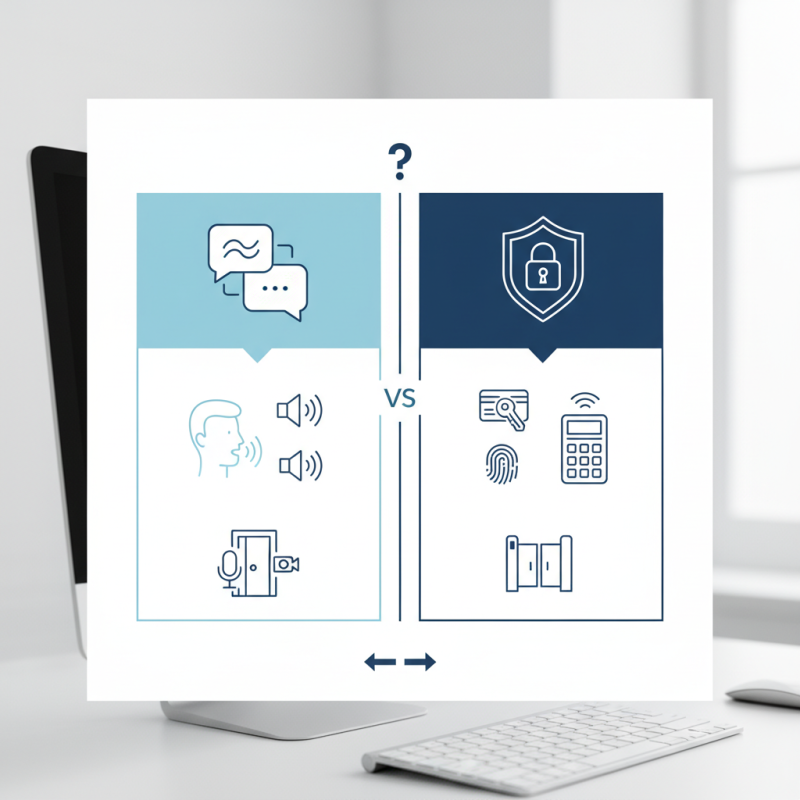
Intercom and access control systems serve distinct but sometimes overlapping purposes.
Intercom systems facilitate communication, often allowing two-way audio or video contact.
Meanwhile, access control systems are designed to manage entry and restrict access to defined areas.
A recent report by the Security Industry Association noted that 45% of security breaches relate to unauthorized entry.
This highlights the critical role of robust access control systems.
When comparing their functionalities, intercoms often feature user-friendly interfaces.
They can integrate with other security measures.
Access control systems, on the other hand, utilize identification methods like keycards or biometric scans.
The integration of these systems can enhance security.
A study indicated that 63% of businesses report improved safety after implementing integrated systems.
Tips: Invest in a high-quality intercom system. Ensure clear audio and video quality for better communication.
Regularly assess your access control system's security measures. This proactive approach can help reveal potential vulnerabilities.
Experts recommend conducting a security audit annually to stay ahead of possible threats.
Applications and Use Cases: When to Use Each System
Intercom systems excel in communication and visitor management. They allow easy two-way talk, enhancing security in residential and commercial spaces. For example, a recent report indicated that over 70% of property managers prefer intercom systems for quick visitor screening. These systems facilitate efficient communication, enabling users to confirm guest identities before granting access.
Access control systems focus on security. They manage and restrict access to specific areas. According to industry data, around 65% of security professionals advocate for access control systems to protect sensitive areas, such as server rooms and restricted facilities. These systems employ key cards, biometrics, or PIN codes to limit entry to authorized personnel.
Choosing between these two depends on the application. For high-traffic areas requiring robust communication, intercoms are ideal. However, for locations needing tight security measures, access control is essential. Balancing both can address communication and security needs in complex environments. It’s important to evaluate specific requirements and potential challenges, as misuse or misconfiguration could compromise effectiveness.
Integration Potential: Combining Intercom and Access Control Solutions
Integrating intercom and access control systems can significantly enhance security and efficiency. Many operators in commercial buildings are now considering this combination. According to a recent industry report, nearly 70% of companies see a need for integrated solutions in their security infrastructure.
Employing these systems together provides seamless communication. For instance, visitors can communicate via intercom before gaining access to secure areas. This can lead to quicker response times and improved visitor management. The report highlighted that organizations using integrated systems reported a 30% reduction in unauthorized access incidents.
However, there are challenges. Compatibility issues may arise between different manufacturers. Not all systems easily integrate, which can create gaps in security. Organizations must carefully evaluate potential solutions to ensure they meet their specific needs. Overall, while integration offers significant benefits, thoughtful implementation is crucial for true effectiveness.
How to Differentiate Between Intercom and Access Control Systems? - Integration Potential: Combining Intercom and Access Control Solutions
| Feature |
Intercom System |
Access Control System |
Integration Potential |
| Main Functionality |
Two-way audio/video communication |
Entry control and restricted access management |
Can function together for enhanced security |
| User Interaction |
Communication primarily through a unit |
Access granted via keycards or biometric systems |
User presence confirmation before access |
| Installation |
Typically easier and less invasive |
Requires more infrastructure, especially for secure entrances |
Integrated systems can simplify installation |
| Cost |
Generally lower installation and maintenance costs |
Higher initial costs with ongoing maintenance |
Combined systems may reduce overall costs |
| Use Cases |
Residential buildings, offices |
Commercial properties, secure facilities |
Commonly used in high-security environments |
FAQS
: Intercom systems enable communication without physical presence. They are used in homes, offices, and public places.
Intercoms often include audio and video capabilities. Users can see or hear each other, enhancing interactions.
They can connect to security cameras and alarms. This creates a multi-layered approach to communication and safety.
Some intercom systems face poor audio quality or limited range. Testing configurations can help find effective setups.
Regular checks are needed to prevent malfunctions. Maintenance ensures longer lifespan and better performance.
They regulate entry and exit through components like card readers and biometric scanners. This enhances security in various settings.
Biometric methods like fingerprint recognition offer better security than key cards. They are becoming popular among companies.
Although flexible, wireless systems can be vulnerable to hacking. Proper security measures and training are crucial.
Understanding technology complexities aids in decision-making. Evaluating security risks and costs is essential for smooth implementation.
Keeping systems updated can prevent security vulnerabilities. It helps maintain functionality and user satisfaction.
Conclusion
The article "How to Differentiate Between Intercom and Access Control Systems?" delves into the key functionalities and features of intercom systems, highlighting their role in enabling communication and monitoring. It then explores access control systems, identifying essential components such as card readers and biometric scanners, which serve to enhance security by managing access to physical spaces. A comparative analysis is presented to address the question of what is the difference between intercom and access control, illustrating how intercoms focus on communication while access control emphasizes security measures.
Furthermore, the article examines various applications and use cases, indicating when it is appropriate to utilize each system. Integration potential is also discussed, showcasing how combining intercom and access control solutions can create a more comprehensive security framework, improving both communication and protection for users in residential and commercial environments.

 SMTR SmartLiving