Facial recognition access control is transforming security protocols across various industries. This technology leverages advanced algorithms to identify individuals by their facial features. According to a recent report from MarketsandMarkets, the facial recognition market is projected to reach $7 billion by 2024, highlighting its growing significance in security.
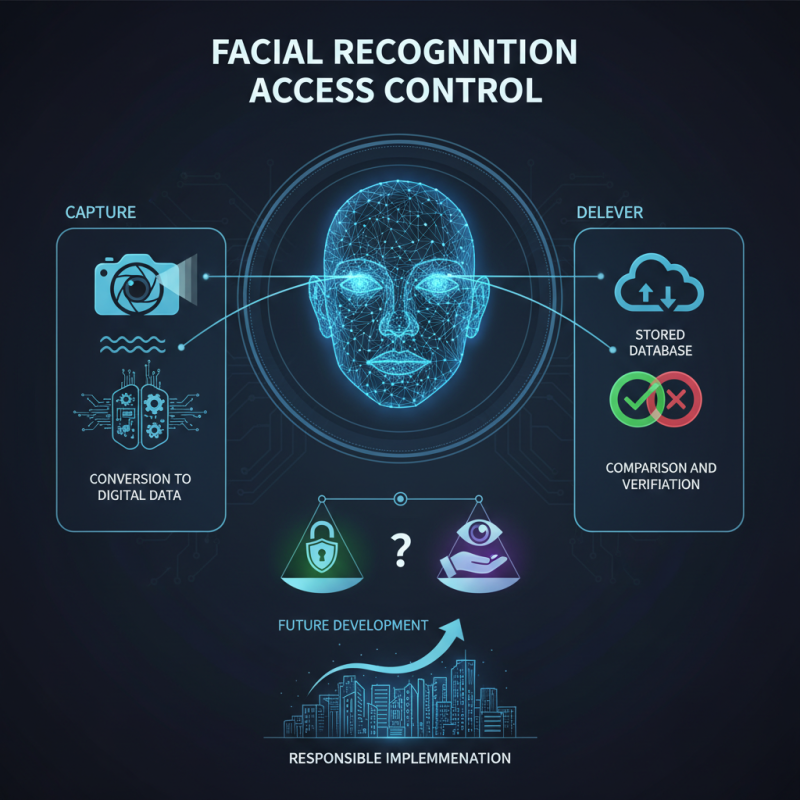
John D. Egeland, a leading expert in biometric technology, states, "Understanding what is facial recognition access control and how it works is pivotal for safeguarding sensitive environments." This statement emphasizes the importance of grasping the mechanics behind this technology. The system captures an image of a face, converts it into a digital format, and compares this data against a stored database for verification. This process, while efficient, raises ethical and privacy concerns that necessitate consideration.
Organizations must strike a balance between security and privacy rights. With potential for misuse, there’s an ongoing debate regarding the regulation of such technology. Continuous development will need to address these risks while adhering to industry standards. The future of facial recognition access control hinges on responsible implementation and public trust.
Facial recognition technology is revolutionizing access control systems across various sectors. It leverages biometric data to identify individuals quickly and accurately. According to a report by Market Research Future, the global facial recognition market is expected to reach $38.2 billion by 2026, reflecting a growth rate of over 16% from 2020. This rapid increase highlights the demand for enhanced security solutions.
Access control systems powered by facial recognition offer numerous benefits, such as convenience and speed. These systems capture facial features using high-resolution cameras, converting them into unique digital templates. In some facilities, the accuracy rate exceeds 99%, significantly reducing unauthorized access incidents. However, challenges remain. Privacy concerns and data protection issues are prominent. A survey from the International Journal of Information Management revealed that over 60% of respondents were wary of facial recognition technology due to potential misuse.
Moreover, not every scenario is ideal for this technology. Environmental factors, like lighting and angle, can affect recognition accuracy. In crowded spaces, performance may decline. Organizations must carefully evaluate when and how to implement these systems. Continuous improvements and ethical considerations are key to gaining broader acceptance and trust in facial recognition access control.
Facial recognition access control systems rely on several key components to function effectively. Cameras capture high-quality images of individuals. These images are then analyzed using advanced algorithms to identify or verify individuals. The accuracy of this system hinges on the quality of the images and the effectiveness of the software.
Processing capacity is crucial. High-performance processors allow for real-time recognition. However, it is important to note that performance can vary across different environments. Lighting conditions, for instance, can significantly affect the system's reliability. Keeping these factors in check is vital for the system to perform optimally.
Tips: Ensure regular maintenance of the cameras and software updates. Validate the system’s accuracy periodically to account for changes in the environment. User privacy should also be considered. Striking a balance between security and personal privacy is essential for trust in the technology. Investing in user education on the system’s benefits is beneficial.
| Component | Description | Functionality | Key Features |
|---|---|---|---|
| Camera | Captures facial images for recognition. | Provides input for the recognition system. | High-resolution lenses, low-light capabilities. |
| Software | Algorithms that compare captured images against stored data. | Analyzes facial features and calculates similarity. | Deep learning, machine learning capabilities. |
| Database | Stores facial data of authorized individuals. | Allows for quick retrieval of stored facial templates. | Secure storage, encryption methods. |
| Access Control System | Controls entry points using facial recognition. | Grants or denies access based on recognition results. | Integrates with alarms and monitoring systems. |
| User Interface | Displays access results and system status. | Allows users to manage access settings. | Intuitive design, remote access capabilities. |
Facial recognition algorithms are sophisticated systems designed to identify individuals by analyzing their facial features. They primarily work through several key steps that are both intricate and fascinating.
Initially, the algorithm processes an image to detect and locate faces. It identifies specific points, like the distance between the eyes or the contour of the jawline. This data forms a unique pattern for each person,
akin to a digital fingerprint.
After the facial features are mapped, the algorithm creates a mathematical representation of the face. This representation is compared against a database of known faces. The accuracy of this matching process varies.
Factors like lighting, angle, and image quality can impact results. Algorithms may struggle with variations in facial expressions or aging, leading to potential misidentifications.
Despite these challenges, advancements in machine learning are enhancing reliability. Continuous training with diverse datasets improves the algorithms' ability to recognize faces in various conditions.
However, ethical considerations arise in its deployment. Privacy concerns and biases present in the training data warrant careful examination. The balance between security and individual rights remains a critical area for ongoing discussion.
Facial recognition technology has become a prominent tool for access control. Its effectiveness in enhancing security is documented in various industry studies. Notably, statistics indicate that facial recognition systems can reduce security breaches by up to 90%. This impressive figure highlights the potential for such technology to transform security protocols in diverse settings.
However, concerns do exist regarding the accuracy and biases in these systems. Reports suggest that misidentification rates can be as high as 35% in certain demographics. This discrepancy raises important questions about the fairness and reliability of facial recognition. While it holds promise, there are challenges that need addressing. Ensuring that the technology is equitable is vital.
As organizations adopt facial recognition, monitoring its impact will be crucial. Assessing how it performs across different environments can help refine these systems. It’s essential to strike a balance between security and ethical considerations. Transparency in how this data is used also fosters public trust. The conversation around facial recognition is ongoing, and improvement is a continuous journey.
This chart illustrates the effectiveness of facial recognition technology in various sectors based on industry statistics. The data represents the accuracy rates of facial recognition systems in different applications.
Facial recognition access control is increasingly used in security systems. However, this technology raises several ethical challenges. Privacy is a significant concern, as facial recognition can track individuals without their consent. Imagine walking down the street, unaware that your face is being scanned and stored in a database. This surveillance can feel intrusive and violates personal freedoms.
Another challenge is the accuracy of the technology. Facial recognition systems can misidentify individuals, leading to wrongful accusations. These errors disproportionately affect marginalized groups. It’s essential to acknowledge the potential biases in the algorithms used. Developers must address these flaws to improve reliability.
Tips: Ensure your system has clear usage policies. Transparency builds trust with users. Regularly audit the technology for bias and accuracy. Engaging with stakeholders can enhance ethical standards. Encouraging an open dialogue about these issues can lead to better solutions and public acceptance. It’s vital to balance security needs with ethical considerations.
: Facial recognition technology identifies individuals by analyzing their facial features. It uses biometric data for quick identification.
Some systems achieve over 99% accuracy in identifying individuals. However, accuracy can vary based on environmental factors.
Lighting conditions and camera angles can impact how accurately faces are recognized. Crowded environments can further complicate performance.
Many individuals feel wary due to potential misuse of their biometric data. Over 60% in a survey expressed these concerns.
Algorithms map facial features and create a unique mathematical representation, comparing it against a database of known faces.
High-performance processors enable real-time recognition, influencing how efficiently the system operates. Variability in environments still affects performance.
Regular camera maintenance and software updates are crucial. Periodic accuracy validation helps the system adapt to environmental changes.
Issues include privacy concerns, potential biases in training data, and the impact on individual rights. Ongoing dialogue is necessary.
Balancing security and personal privacy is essential. User education about benefits can also enhance acceptance and trust in the technology.
Facial recognition access control is an advanced security system that employs facial recognition technology to manage and authorize access to secure areas. Understanding what facial recognition access control and how it works involves examining the fundamental components, which include high-resolution cameras, sophisticated algorithms, and databases for storing facial data. These systems process and identify faces through a series of algorithms that analyze facial features, creating unique biometric profiles for individuals.
Statistics indicate that facial recognition technology enhances security measures in various industries by reducing unauthorized access incidents. However, while the effectiveness of these systems is noteworthy, challenges such as privacy concerns and ethical implications continue to arise. As facial recognition access control evolves, it is crucial to address these issues while leveraging its potential for improved security and efficiency.
SMTR SmartLiving