Smart doorbells are redefining home security and convenience. According to a recent report by Statista, the smart doorbell market is projected to reach $5 billion by 2025. This surge highlights the growing consumer interest in this technology. But what features should a smart doorbell have? Industry expert Jane Smith, a leading voice in home automation, emphasizes, "Smart doorbells must combine security, convenience, and user-friendliness."
Modern smart doorbells offer features like high-definition video, two-way audio, and motion detection. These elements ensure that users can monitor their homes even when away. Moreover, integration with smart home systems enhances their appeal. However, not all products deliver equally. Many users may overlook essential features, leading to unsatisfactory experiences.
Consumers should assess their needs carefully. Some may prioritize video quality over additional functionalities. Others might find cloud storage or local storage equally important. Each feature contributes to the overall value of a smart doorbell. Therefore, understanding what features should a smart doorbell have is crucial for making an informed decision.
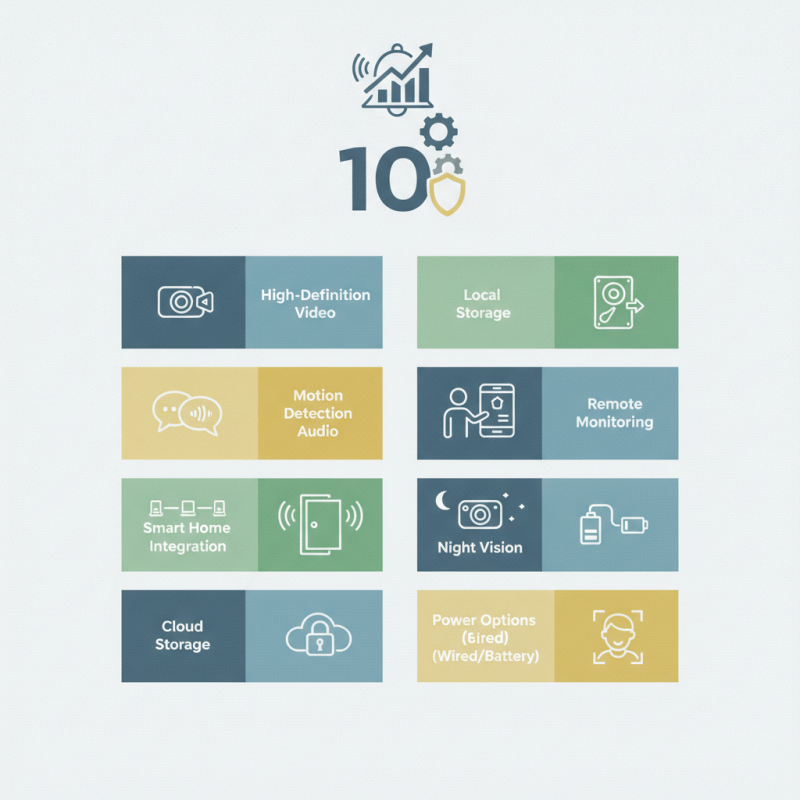
Top 10 Features of Smart Doorbells Buyers Should Know
Smart doorbells have revolutionized home security. When buying a smart doorbell, consider essential features that enhance safety and convenience. Look for high-definition video quality. This feature ensures clear images day or night. Motion detection is another crucial aspect. It alerts you when someone approaches, even if they don’t ring the bell.
Audio features can be surprisingly important. Two-way audio allows you to communicate with visitors remotely. This function is particularly handy for deliveries. Always check the installation process. Some doorbells require professional setup, while others can easily be installed by yourself.
Tips: Assess your home’s layout before purchasing. Ensure your Wi-Fi signal covers the installation area. This avoids connectivity issues. Additionally, think about storage options. Many doorbells offer cloud storage, while others use local storage. Choose what suits your needs best. Do not ignore these practical details. They can significantly impact your experience with the device.
Understanding Video Quality: Resolution and Night Vision Capabilities
When choosing a smart doorbell, video quality is a key factor. Resolution affects how clear the image is. Most models offer HD options, usually ranging from 720p to 1080p. Higher resolution provides more detail, especially for facial recognition. Night vision capabilities are essential for those with nighttime deliveries. Look for doorbells that use infrared technology to capture clear images even in low light.
Tip: Ensure you check the field of view. A wider angle allows for more coverage of your entrance. This is especially useful for monitoring multiple areas.
The night vision quality varies among models. Some may offer a black-and-white view, while others may feature color night vision. It's vital to assess how well the doorbell performs in different lighting conditions. While some products promise clarity, they may fall short in real-world scenarios.
Tip: Consider the installation location. Shadows and bright lights can impact video quality. Testing the setup during various times of the day can help you make the right choice.
Top 10 Features of Smart Doorbells Buyers Should Know
| Feature |
Description |
Resolution |
Night Vision |
| Video Quality |
High-definition video capture for clear visuals. |
1080p, 1440p, or 4MP options available. |
Infrared night vision for low light conditions. |
| Two-Way Audio |
Enables users to communicate with visitors. |
N/A |
N/A |
| Motion Detection |
Alerts users of movement in the camera's view. |
N/A |
N/A |
| Cloud Storage |
Offers cloud storage for recorded videos. |
N/A |
N/A |
| Video History |
Access to past recordings for review. |
N/A |
N/A |
| Smart Home Integration |
Compatible with various smart home systems. |
N/A |
N/A |
| Mobile App Control |
Manage settings and receive alerts through an app. |
N/A |
N/A |
| Weather Resistance |
Designed to withstand the elements. |
N/A |
N/A |
| Installation Options |
Various installation methods available. |
N/A |
N/A |
| Battery vs Wired |
Options for battery-operated or hardwired models. |
N/A |
N/A |
Two-Way Audio: Enhancing Communication with Visitors and Delivery Personnel
Two-way audio is a critical feature of smart doorbells. This technology enhances communication between homeowners and visitors. For instance, a study by the Consumer Technology Association found that 55% of smart doorbell users appreciate the ability to talk to delivery personnel without opening the door. This capability is especially valuable during package deliveries.
Imagine receiving a package while at home. With two-way audio, you can easily instruct the delivery person where to leave the package. You could also inform unwanted visitors that you are not available. Such interactions can elevate the security of your home. In fact, reports suggest that homes with video doorbells experience a 50% reduction in package thefts.
However, some users face challenges. They might struggle with audio quality or experience delays in communication. A survey indicated that 20% of users reported connectivity issues. These factors can undermine the convenience of two-way communication. As technology evolves, manufacturers will need to address these shortcomings to meet consumer needs. Effective updates are crucial for maintaining trust and reliability in smart home devices.
Motion Detection Technologies: Types and Their Impact on Security
Motion detection technologies play a crucial role in the functionality of smart doorbells. There are primarily two main types: passive infrared (PIR) and video-based detection.
PIR sensors are cost-effective and widely used. They detect body heat and respond to the movement of people. Reports show that over 70% of smart doorbells utilize PIR technology for detecting visitors and potential intruders.
Video-based detection is gaining traction due to its advanced features. It uses image processing algorithms to identify and analyze movement. A study highlights that video-enabled detection can reduce false alarms by 40% compared to traditional PIR systems. With this technology, homeowners receive accurate alerts, enhancing security measures.
One limitation of these technologies is sensitivity. High traffic areas may trigger unnecessary notifications, causing annoyance. Additionally, environmental factors like rain or snow can affect sensor performance. This variability necessitates a thoughtful balance between responsiveness and reliability. Thus, understanding the strengths and weaknesses of these motion detection types helps buyers make informed decisions when selecting smart doorbells.
Integration with Smart Home Systems: Compatibility with Other Devices
Smart doorbells have become popular in recent years. One significant aspect to consider is their integration with smart home systems. Compatibility with other devices enhances their functionality. You want a doorbell that works seamlessly with your existing setup.
Many smart doorbells connect to various platforms. They can communicate with smart locks, lights, and even security cameras. This means you can receive alerts, unlock doors, or illuminate your porch with ease. Imagine getting a notification from your doorbell, illuminating your home while you answer. This interconnectedness provides a sense of convenience and security.
When selecting a smart doorbell, consider compatibility details closely. Not all devices communicate well together. Research the specifications to ensure a smooth integration process. You may end up frustrated if the doorbell doesn't work as expected. Sometimes minor adjustments are needed for optimization, and this can affect your overall experience.
One tip is to use a smart hub to bridge compatibility gaps. Smart hubs can connect different brands and devices. This approach can simplify your control. Always check for firmware updates; this keeps devices functioning optimally. Engaging with community forums can provide insights on integration challenges and solutions.
Cloud Storage Options: Data Retention and Accessibility for Recorded Footage
Cloud storage options have become a crucial feature for smart doorbells. They allow users to securely store recorded footage. Many systems offer various retention policies. This means you can save clips for weeks or months, depending on your needs. Users can access this footage anytime from anywhere. This flexibility enhances peace of mind.
However, not all cloud services are equal. Some may impose limitations on storage space or charge extra fees for extended retention. Researching these options is essential. Understand the terms, costs, and accessibility standards. While cloud storage offers convenience, it also raises questions about data privacy. Users must consider how their data is handled. Are the servers secure? Who has access to the footage? These concerns are legitimate and require careful examination before selecting a smart doorbell system.
FAQS
: Focus on resolution and night vision. Higher resolutions provide clearer images for facial recognition.
Good night vision captures clear images in low light. Infrared technology is preferred for nighttime visibility.
A wider angle allows for more coverage, monitoring multiple areas effectively. It enhances overall security.
The two main types are passive infrared (PIR) and video-based detection. Each has different strengths and weaknesses.
Video-based detection can reduce false alarms by 40%. It's more accurate in identifying and analyzing movement.
High traffic areas can trigger unnecessary notifications. Rain or snow may also impact sensor performance.
Look for retention policies that fit your needs. Many offer secure and accessible options for recorded footage.
No, some have limitations and extra fees. It's important to research terms and data handling practices.
Users must consider how data is stored and who can access it. Security of servers is a key issue.
Test your setup at different times. Observe how shadows or bright lights affect video quality.
Conclusion
When considering what features should a smart doorbell have, buyers should prioritize several key aspects to enhance security and convenience. First, understanding video quality is essential; look for doorbells with high resolution and night vision capabilities to ensure clear images at all times. Additionally, two-way audio functionality allows for seamless communication with visitors and delivery personnel, which is vital for convenience and security.
Moreover, motion detection technologies play a significant role in alerting homeowners to any activity at their door. Compatibility with other smart home devices is also crucial, as it allows for better integration into existing systems. Finally, buyers should consider cloud storage options for easy data retention and accessibility of recorded footage, ensuring that important moments are never missed. By focusing on these features, homeowners can select a smart doorbell that effectively meets their needs.

 SMTR SmartLiving